Hyundai Venue warning lights: 14 dashboard signals to check first
Official 2026 Hyundai Venue warning-light guide covering 14 dashboard signals, from brake, charging, coolant, and engine alerts to TPMS, front-safety, and...
The Hyundai Venue is small and city-friendly, which makes it easy to underestimate a warning light. That is the wrong instinct. You should separate brake, charging, coolant, engine, TPMS, and front-safety alerts as quickly as possible. This guide is based on the official 2026 Hyundai Venue QX warning-light page and owner's manual and narrows the list to the 14 signals most worth checking first. Model year and equipment can change what appears on your cluster, so switch to your exact year on the official page before you trust a perfect match.
Check the icon before you guess
The shared Hyundai library can still surface AWD, diesel, hybrid, or EV icons next to Venue items. Judge urgency first, then compare your exact symbol on the official warning-light page.
Check my Venue icon on the official warning-light page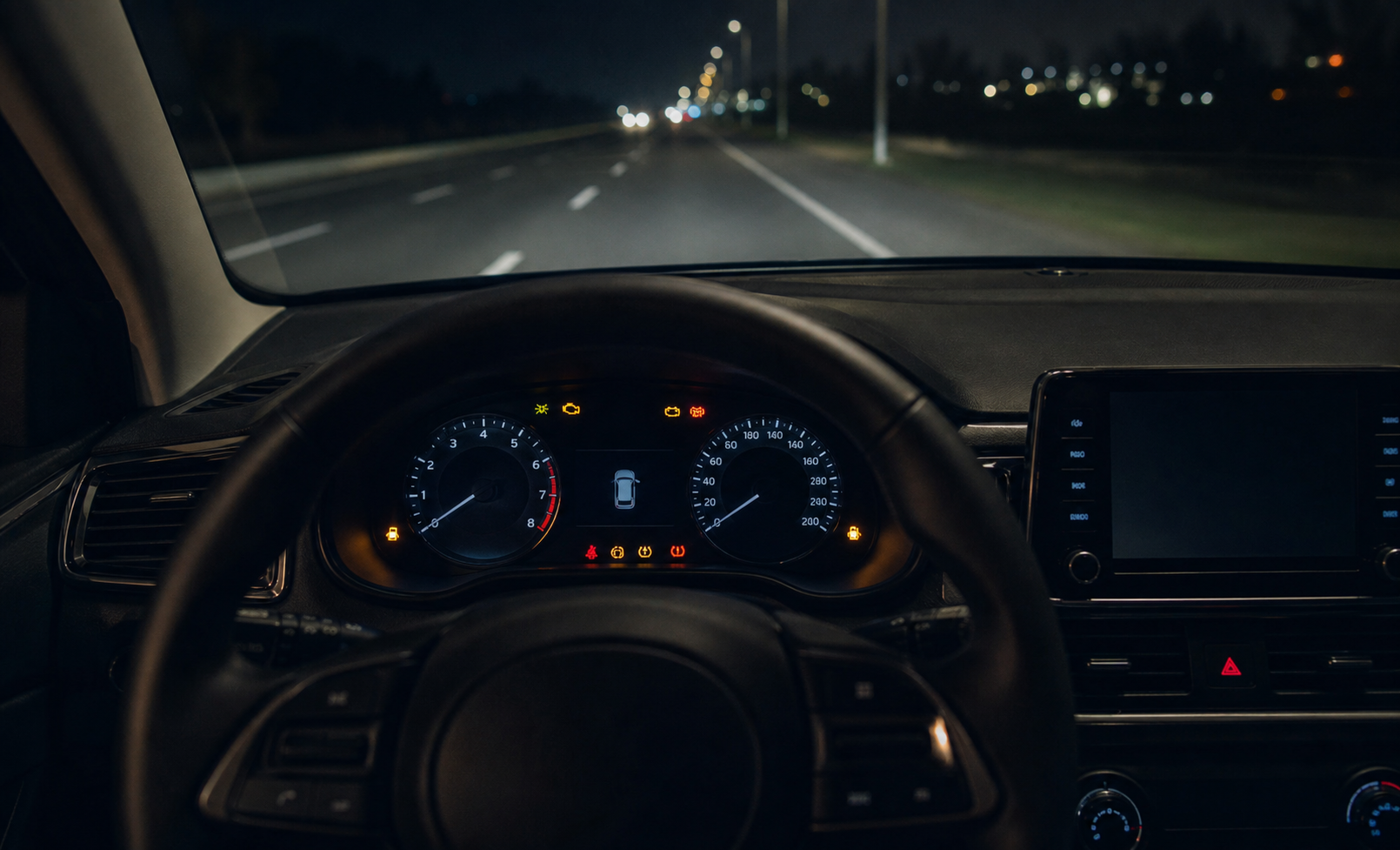
How to sort Venue warning lights quickly
- Red: brake, charging, coolant temperature, EPS, and airbag warnings deserve immediate attention.
- Amber: engine, ABS, TPMS, EPB, ESC, master warning, front-safety, LED headlamp, and GPF alerts may still allow driving, but they should not wait long.
- Green or blue: many are status indicators, but always read the cluster message with them.
- Gasoline Venue baseline: diesel, hybrid, and EV-only icons can still show up in the shared official library, even when they are not central to this model.
14 Venue warning lights worth checking first
| Type | Light | Meaning | What to do now |
|---|---|---|---|
| Immediate |  Brake Brake | Parking brake, low brake fluid, or braking-system fault | Slow down safely and inspect it if the light stays on |
| Immediate |  Charging Charging | Charging-system or electrical fault | Reduce electrical load and arrange a prompt inspection |
| Immediate |  Coolant temperature Coolant temperature | Cooling-system temperature may be too high | Stop pushing the car, park safely, and let it cool down |
| Immediate |  Electronic power steering Electronic power steering | Steering-assist malfunction | If the wheel feels heavy, inspect it before another drive |
| Immediate |  Airbag Airbag | Airbag or pretensioner fault | Do not leave it unresolved because crash protection may be reduced |
| Inspect soon |  Engine Engine | Engine-control, fuel, sensor, or emissions fault | If it comes with rough running or power loss, inspect it promptly |
| Braking assist |  ABS ABS | Anti-lock braking fault | Be more conservative in rain or emergency-braking situations |
| Tires |  Low tire pressure / TPMS Low tire pressure / TPMS | Low pressure or TPMS fault | Check all four tires before the next faster drive |
| Parking |  Electronic parking brake Electronic parking brake | EPB-system issue | Check how it applies and releases, then book service if it stays on |
| Stability |  ESC ESC | Stability-control intervention or fault | Flashing can mean active control; a steady light means inspect it |
| Combined |  Master warning Master warning | Another message or system issue is waiting elsewhere | Read the cluster message before assuming the light is minor |
| Front safety |  Front safety Front safety | Front-safety feature disabled, blocked, or malfunctioning | Clean the camera or radar area first and inspect it if it returns |
| Night safety |  LED headlamp LED headlamp | Headlamp-system issue | Check lighting before night or rain driving |
| Gasoline |  Gasoline particulate filter (GPF) Gasoline particulate filter (GPF) | Gasoline particulate filter issue or regeneration-related alert | If it repeats, inspect your driving pattern and confirm the official explanation |
These icons were checked against the official 2026 Hyundai Venue QX warning-light API. Shared Hyundai AWD, diesel, hybrid, and EV symbols can still appear, so compare your exact icon before assuming the label applies.
1. Red warnings still deserve the fastest reaction
Brake, charging, coolant temperature, EPS, and airbag warnings are not lights to leave for later. On a small city SUV, the car can still feel easy to drive for a moment even when the dashboard is already telling you to stop and check.
Charging warnings are especially easy to underestimate because many drivers think only about the battery. The real issue can involve the wider charging system or electrical load, so reduce unnecessary power use and arrange inspection quickly.
2. Engine and GPF warnings make more sense together
The engine warning light can point to control, fuel, sensor, or emissions issues. If it stays on, returns while driving, or appears with rough running, you are better off reading the fault code than guessing from the icon alone.
The GPF warning matters on a gasoline Venue because repeated short trips or other operating patterns can affect the filter system. If it keeps returning, check the official explanation first and then move toward diagnosis instead of improvising a fix.
3. TPMS, ABS, EPB, ESC, and front-safety alerts decide whether another drive is still wise
Amber warnings do not always mean stop immediately, but they often separate a vehicle that can still move from one that is still smart to keep using. TPMS can feel minor in town but matter a lot more at speed, while ABS and ESC become more important the moment the road turns wet or slippery.
EPB, master warning, front-safety, and LED headlamp alerts deserve the cluster message and a quick sensor or lighting check. If they return repeatedly, treat them as safety issues rather than background convenience faults.
4. Change the model year before trusting a perfect match
This article follows the 2026 Hyundai Venue QX. Even with the same model name, 2025, 2026, and 2027 model years can use different warning-light combinations and explanations. Open the official page, switch to your own year, then compare the icon again.
Related Hyundai warning-light guides
In short, Venue warning lights are easier to handle when you separate stop-now red alerts, inspect-soon amber alerts, and gasoline-specific engine or GPF signals. When the symbol feels ambiguous, compare it directly against the official page instead of guessing.