i40 dashboard warning lights: 14 signals from stop to service
A practical 2018 Hyundai i40 VF warning-light guide covering oil pressure, charging, brakes, coolant temperature, engine, ABS, TPMS, EPB, ESC and safety sy...
An i40 warning light needs a quick decision: should you stop now, or arrange a check soon? This guide follows the official 2018 Hyundai i40 VF warning-light and symbol data. Year, trim, engine and cluster type can change the lights shown on your car.
This page uses Hyundai’s verified official English warning-light route. Compare the exact symbol and the message shown in your own cluster before acting.
Compare the exact icon before guessing
Open the official warning-light page for the 2018 VF configuration.
Open the official i40 warning-light page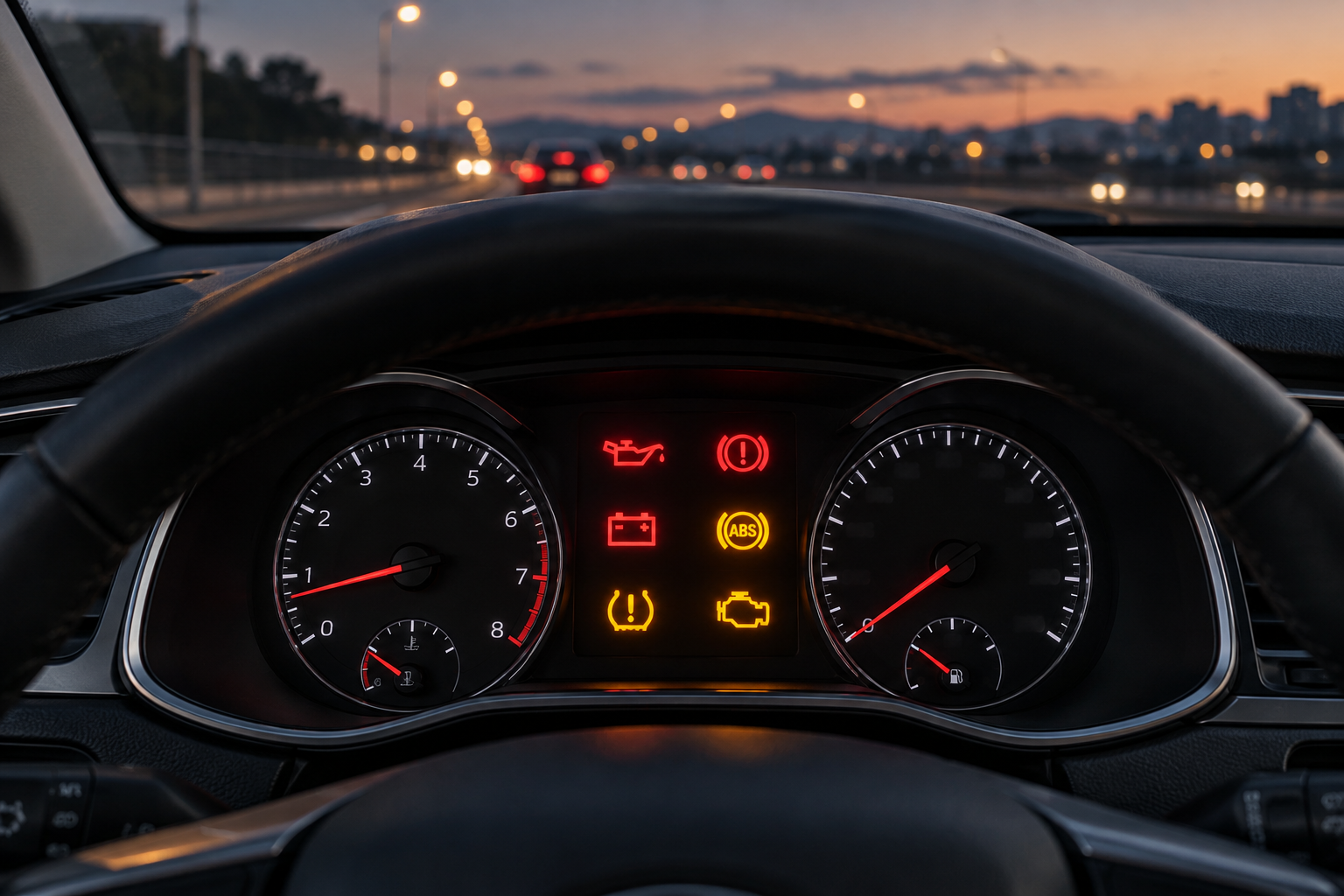
Quick color guide
- Red: stop safely and inspect oil, brakes, coolant, charging or steering first.
- Amber: find the cause and arrange service for engine, ABS, TPMS, EPB, ESC or safety warnings.
- Green or blue: usually an operating-state indicator, unless it flashes unexpectedly or stays on.
- This guide is for the 2018 gasoline VF baseline; diesel-specific warnings need their own manual.
14 i40 signals worth checking first
Some lights appear briefly during the normal start-up check. A light that remains on or returns while driving deserves the action in the last column.
| Type | Light | Meaning | Action |
|---|---|---|---|
| Stop |  Oil pressure | Low oil level or pressure | Stop, check oil, and do not continue if it remains |
| Immediate |  Charging | Drive belt or charging-system fault | Arrange inspection before discharge or overheating |
| Braking |  Brake | Parking brake, low fluid or brake fault | Slow down smoothly, stop and check braking |
| Stop |  Coolant temperature | Engine temperature is too high | Stop driving, let it cool and arrange service |
| Safety |  Airbag | Airbag or pretensioner fault | Inspect it if it remains after 3–6 seconds |
| Service |  Engine | Engine control or fuel-supply fault | Have it checked soon; tow if it will not start |
| Braking |  ABS | Anti-lock braking-system fault | Restart safely; arrange service if it returns |
| Tires |  Low tire pressure / TPMS | Low pressure or TPMS fault | Slow down and inspect all four tires |
| Parking |  EPB | Electronic parking-brake fault | Inspect it if it stays on after start-up |
| Stability |  ESC | Flashing can mean intervention; steady can mean a fault | Slow down on slippery roads and service a steady light |
| Combined |  Master warning | One or more vehicle or assistance issues | Read the detailed cluster message first |
| Safety assist |  Front safety | Feature disabled, sensor blocked or faulted | Clean the camera or radar area and recheck |
| Steering |  Power steering | Steering assistance may be reduced | Stop safely if the wheel feels heavy |
| Steering safety |  Steering safety | Safety-steering status or fault | Check sensors and service a persistent light |
The icons are official Hyundai VF 2018 warning assets. Their dark foreground and transparent background are shown on light chips for contrast.
Red lights mean stop before troubleshooting
Oil pressure, charging, brake, coolant-temperature, airbag and steering warnings can have safety or mechanical consequences. If braking, steering or temperature changes, use roadside assistance or a tow.
Read engine, tire and brake warnings together
Engine, TPMS, ABS, EPB and ESC warnings describe different systems, but they all change the next drive. A recurring light, new vibration or changed pedal feel matters more than the amber color alone.
Switch to your own model year
This article uses the 2018 VF configuration. The same model name can have different warning-light combinations in 2025, 2026 and 2027. Open the official manual, change the year selector and compare the exact symbol again.
Official source check
- Open Hyundai’s official i40 manual.
- Choose your model year.
- Open the warning-light chapter.
- Stop driving and arrange service for persistent red brake, oil, coolant, charging or steering warnings.
Older i40 diesel versions need their own official manual before diesel-only warnings are applied.