i30 warning lights: 14 checks from stop to service
A practical 2020 Hyundai i30 PD guide to oil pressure, charging, coolant temperature, brakes, ABS, TPMS, engine, GPF and other warning lights, with the nex...
If an i30 warning light appears suddenly, start with the color and ask whether it is only part of the normal start-up check. Red oil-pressure, brake, charging and coolant warnings can require a stop before any further driving.
This guide follows the verified 2020 Hyundai i30 PD owner's manual and warning-light data. Trim, cluster type and equipment can change the displayed symbols, so compare the final icon with the official page for your exact model year.
Compare the exact icon before guessing
This page uses Hyundai's verified official English warning-light page as its source.
Open the official i30 warning-light page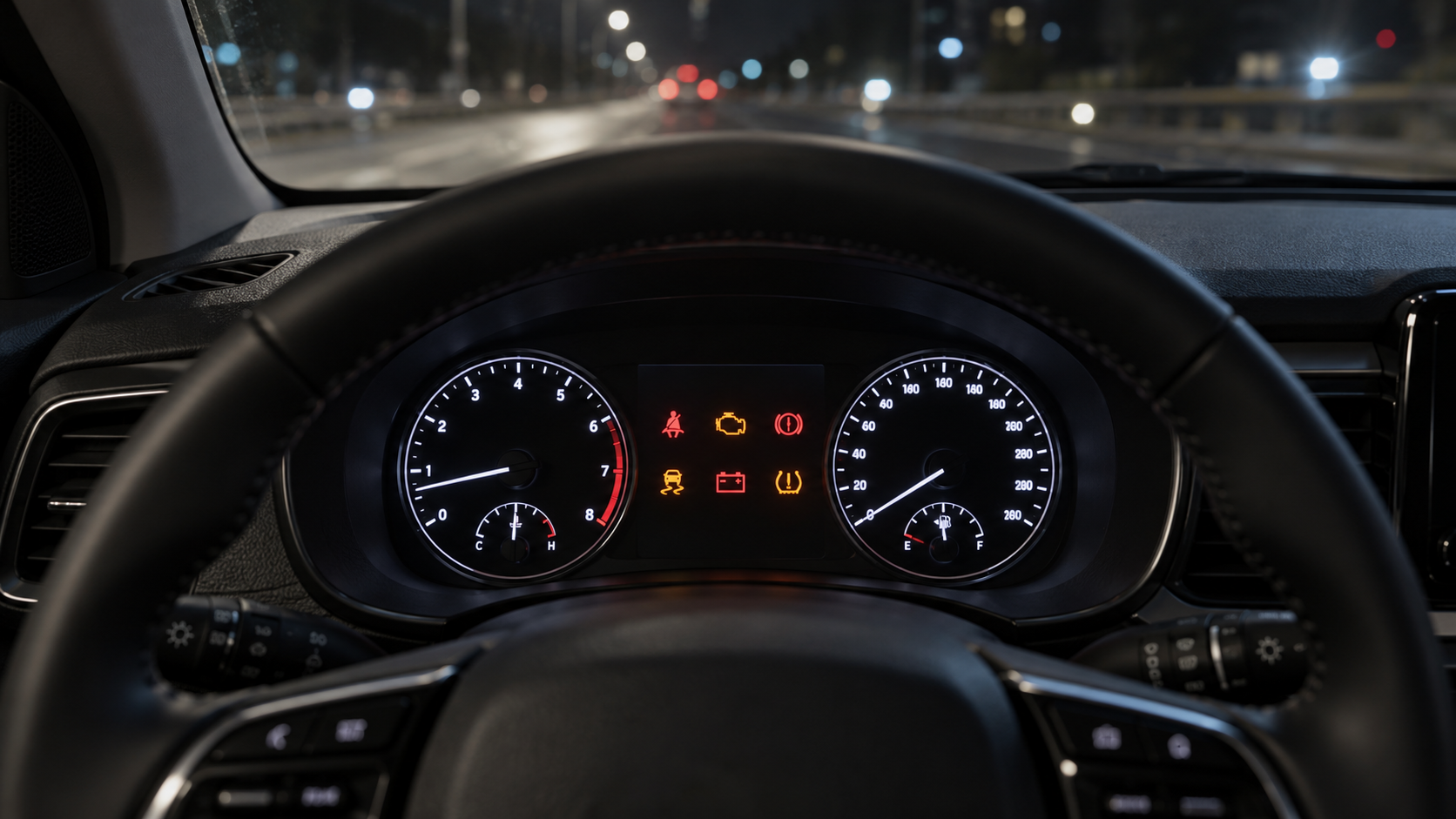
Quick color guide
- Red: stop safely and check brakes, oil pressure, charging or overheating.
- Amber: reduce risk, read the message and arrange a check soon.
- Green or blue: usually an operating-state indicator.
- Powertrain note: this article is for the 2020 gasoline PD configuration, not diesel, hybrid or EV-specific warnings.
14 i30 warning lights at a glance
Icons that appear briefly after startup can be part of the self-check. A light that remains on or returns while driving deserves the action below. The symbols were downloaded from Hyundai's official PD warning-light API and checked for contrast; the selection follows the 2020 manual's applicable gasoline coverage.
| Group | Light | Meaning | Next action |
|---|---|---|---|
| Steering |  EPS | Electric power steering fault | Stop safely if steering becomes heavy and arrange service. |
| Safety assist |  Front safety | Feature off, sensor blocked or fault detected | Clean the camera/radar area and recheck. |
| Immediate |  Oil pressure | Low oil level or oil pressure | Stop, check the oil and do not continue if the light remains. |
| Brakes |  Brake | Parking brake, low fluid or brake-system issue | Slow down gently, stop and check the braking system. |
| Protection |  Airbag | Airbag or pretensioner fault | Arrange a prompt inspection if it remains after 3–6 seconds. |
| Brakes |  ABS | Anti-lock braking system fault | Restart once in a safe place; service it if it returns. |
| Engine |  Engine | Engine control or fuel-system fault | Arrange service soon; tow the car if it will not start. |
| Immediate |  Charging | Drive belt or charging-system fault | Inspect it and avoid continued driving if it stays on. |
| Overheating |  Coolant temperature | Coolant temperature is too high | Stop driving and arrange an overheating check. |
| Tires |  Low tire pressure / TPMS | Low pressure or sensor fault | Slow down and check all tires for damage and pressure. |
| Parking |  EPB | Electronic parking-brake fault | Check release and service it if the light remains. |
| Stability |  ESC | Flashing means intervention; steady can mean a fault | Slow down on slippery roads and inspect a steady light. |
| Emissions |  GPF | Gasoline particulate filter issue | Follow the manual's safe driving procedure; service it if it remains. |
| Combined |  Master warning | One or more assistance or vehicle issues | Read the cluster message before treating it as minor. |
Hyundai's shared library also lists diesel, hybrid and EV items. They are not included here because this guide is narrowed to the 2020 gasoline PD manual.
Red lights mean a stop decision
Oil pressure, charging, coolant temperature and brake warnings should not be dismissed because the car still moves. An oil warning can lead to engine damage, a charging warning can precede overheating or a flat battery, and a coolant warning can signal overheating. If braking feel or steering assistance changes, slow down safely and arrange service rather than testing the car further.
Engine, tire and ABS warnings change the next drive
An engine warning can indicate an engine-control or fuel-supply issue. TPMS calls for lower speed and a tire check, while ABS should be treated seriously even if normal braking still works. GPF guidance in the 2020 manual uses a safe driving procedure; if the light flashes or a message remains afterward, arrange service rather than repeating the test indefinitely.
Use the exact manual for diesel, hybrid and EV versions
This guide is for the 2020 gasoline PD configuration. The shared Hyundai warning-light library can expose diesel fuel-filter or urea items, hybrid power-down or high-voltage-battery items, and EV READY indicators, but those should be checked in the exact manual for that powertrain.
The same model name can have different warning-light combinations in 2018, 2019 and 2020. Open the official manual, change the year selector, and compare the warning-light chapter for your own car.
Official English source and next steps
- Open the official i30 warning-light page.
- Change the model year to match your car.
- Compare the exact icon and cluster message.
- Stop driving and arrange service for red brake, oil, charging, steering or coolant warnings.